
Screven County Criminal Court Cases
Screven County belongs to the four-county Ogeechee Judicial Circuit. Superior Court handles felonies, felony pleas and trials, and appeals involving record restriction. State Court hears misdemeanors and traffic cases within its jurisdiction. Magistrate Court handles warrants, first appearances, and preliminary matters. Sylvania Municipal Court keeps its own ordinance and qualifying traffic or misdemeanor docket, so a city citation may not appear in the county clerk’s file.
Superior, State, and Magistrate court offices are at 216 Mims Road in Sylvania. The Superior and State criminal clerk number is 912-564-2614. The Georgia Superior Court Clerks’ Cooperative Authority directory is a useful official check for the Screven clerk’s current listing.
The official clerk directory provides a visual reference for the office that holds felony files.
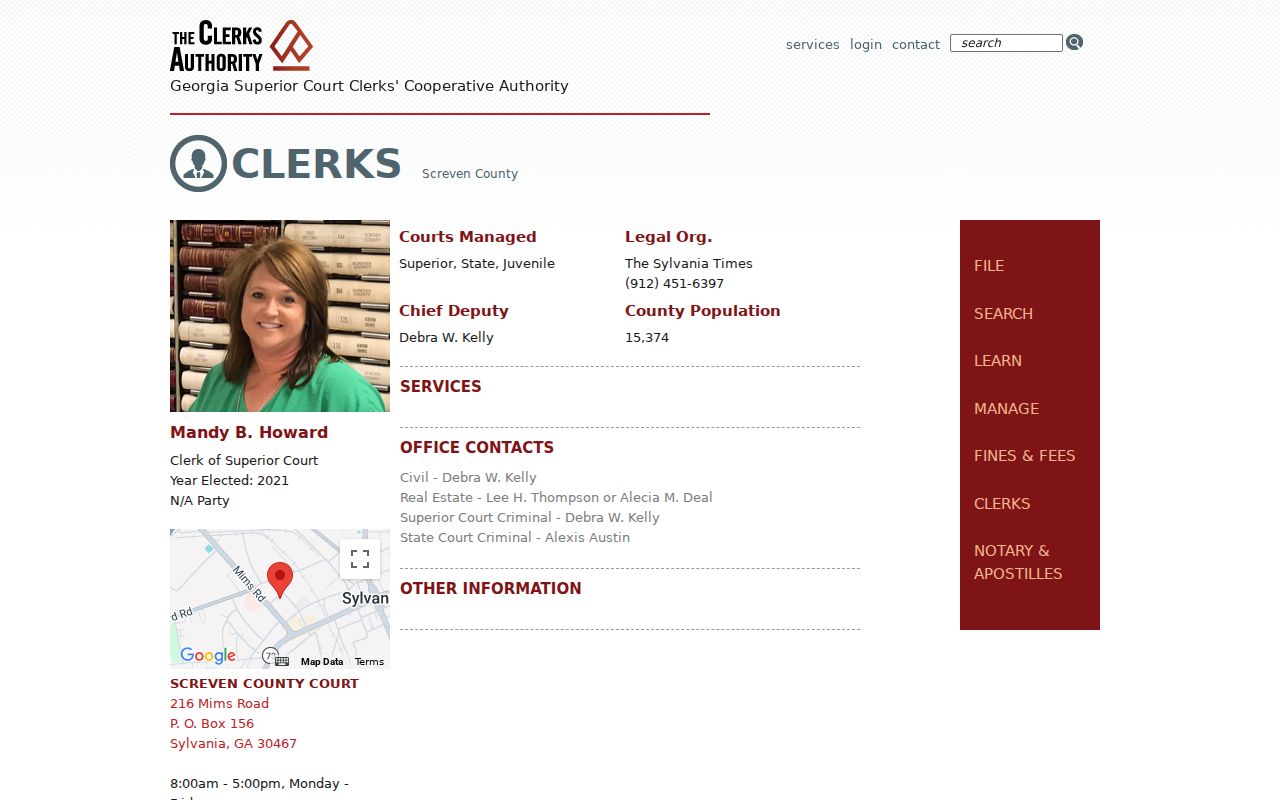
Use that directory to verify the clerk, then call the criminal division before traveling.
Which Screven Court Has It?
Start with the charge and place of filing, not just the arresting agency. A felony normally belongs in Screven Superior Court. A qualifying misdemeanor may be filed in State Court, while a city ordinance or traffic matter can remain in Sylvania Municipal Court. Magistrate entries can explain a warrant or first appearance without supplying the final prosecution file.
| Court | Likely record | Verified route |
|---|---|---|
| Superior Court | Felony indictment, plea, trial, sentence | 216 Mims Rd; 912-564-2614 |
| State Court | Misdemeanor and traffic case | 216 Mims Rd; 912-564-2614 |
| Magistrate Court | Warrant and early-stage matter | County court counter |
| Sylvania Municipal Court | City ordinance and qualifying traffic matter | official city court page |
The Council of Superior Court Judges’ Screven directory also identifies the county within Georgia’s Superior Court system.
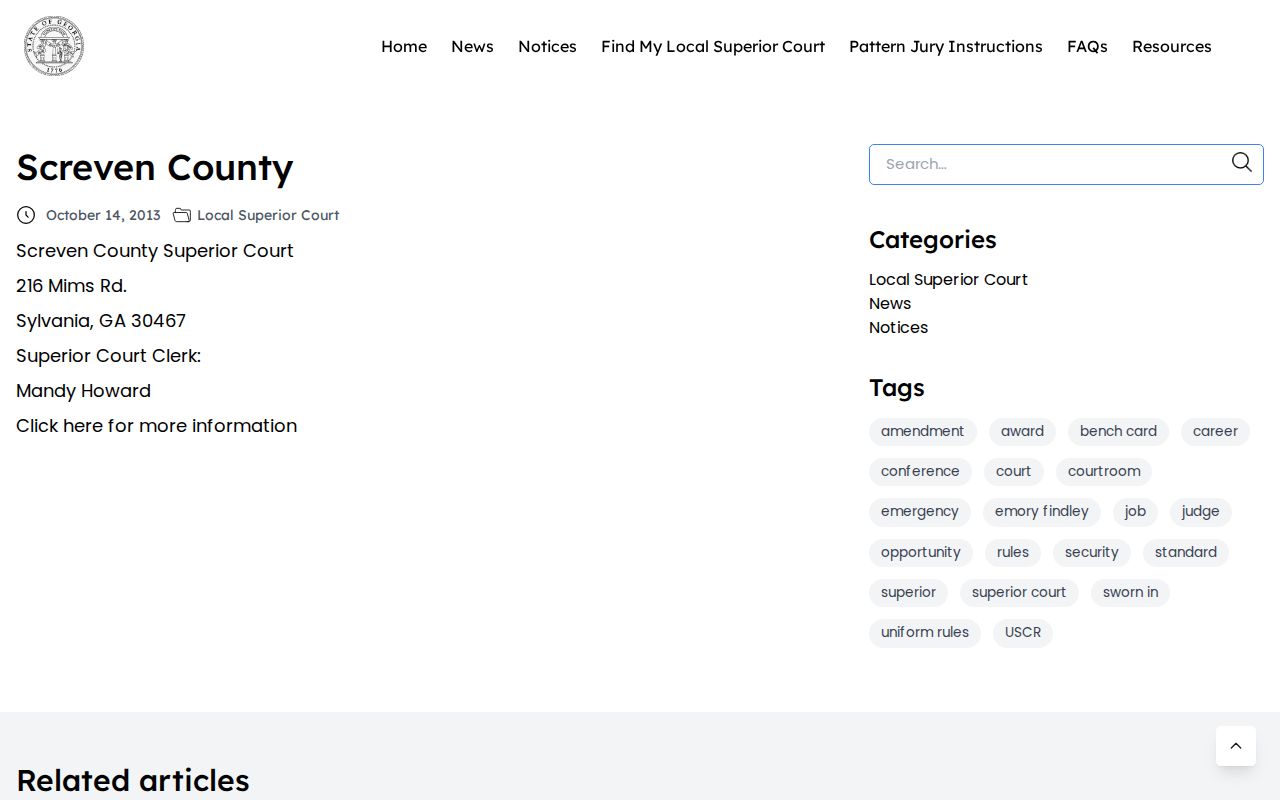
That source helps confirm court identity, but the clerk remains the source for a particular docket or certified document.
Searching Screven County Case Records
Georgia’s official e-access gateway routes users to participating vendors rather than exposing a stable free Screven County search form. Coverage, accounts, fees, and downloadable documents can differ by vendor. A name search may therefore fail even though the clerk holds a paper or indexed case.
- Decide whether the matter belongs in Superior, State, Magistrate, or Municipal Court.
- Try a participating e-access vendor with the full name, filing year, or case number.
- Call 912-564-2614 and ask the proper criminal division to confirm the case number and status.
- Read docket entries in date order and distinguish an allegation from the final disposition.
- Ask the clerk for an electronic, plain, or certified copy and request a cost estimate first.
| Field Label | Type | Required | Notes |
|---|---|---|---|
| Last name | Text | Vendor-dependent | Use the filed spelling |
| First name | Text | Vendor-dependent | Add a middle name if known |
| Case number | Text | No | Best identifier when available |
| Filing year | Year | No | Helps narrow common names |
| Court or case type | Select | Vendor-dependent | Choose the criminal division |
Screven Criminal Case Vendor Limits
The Georgia court-record vendor list identifies services that may carry participating court data. It does not promise that every Screven filing, historical paper, sealed matter, or image is online. Registration and charges may apply, and live fields should be checked at the time of use.
The vendor page shows the official route into remote court access.
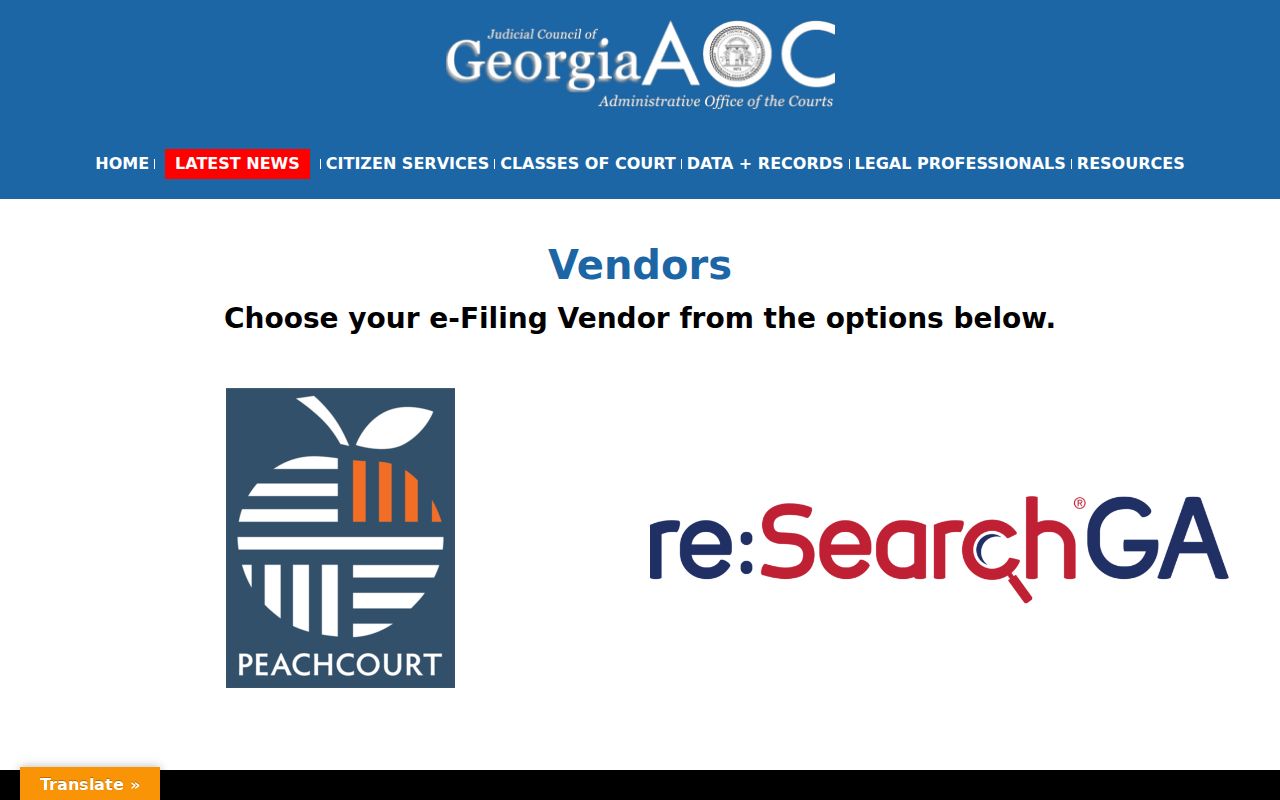
If a vendor offers only an index, request the filed document directly from the Mims Road clerk.
The statewide e-file and court-record information explains Georgia’s electronic framework.
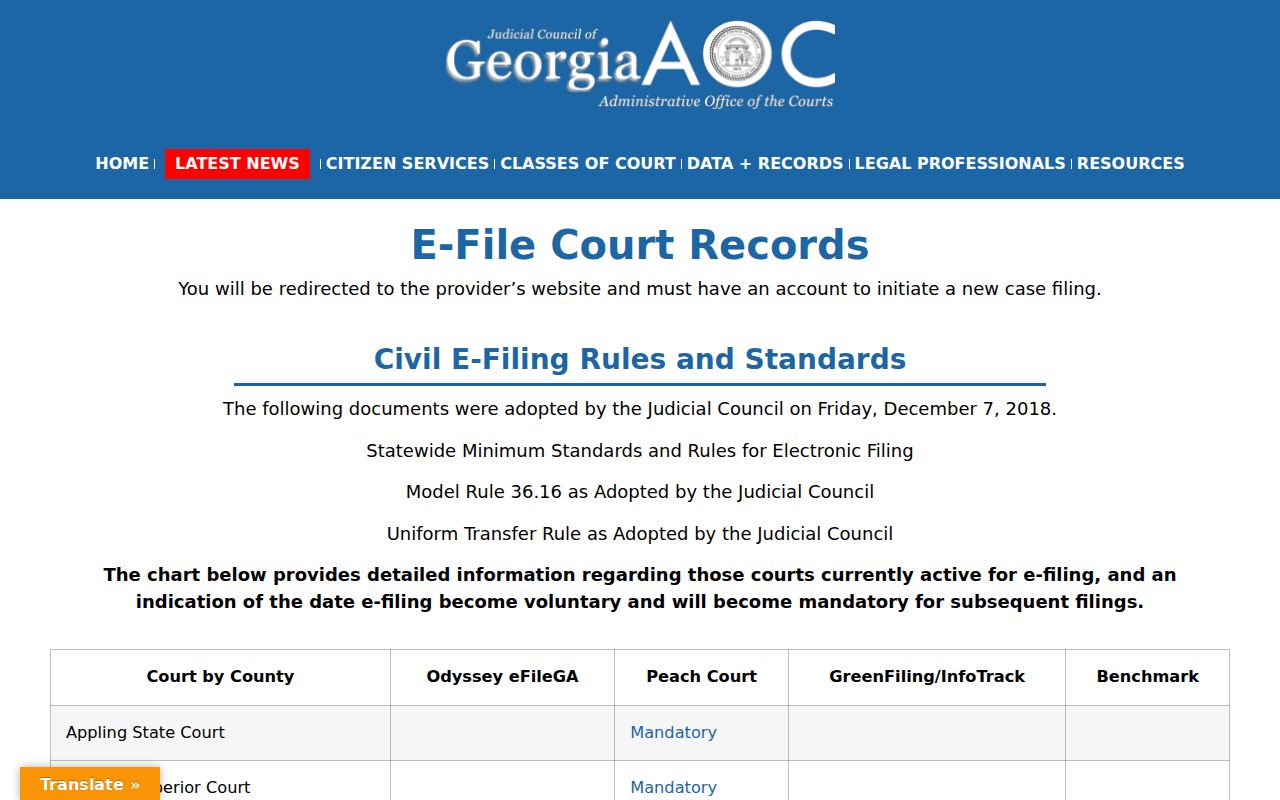
E-filing by court users is not the same as unrestricted public access to every document.
Inside a Screven County Case File
A criminal case file records the prosecution after filing. Searchers usually need the docket and final judgment first, then the charging document and sentence when the outcome requires more context. Police narratives, booking photographs, and the full statewide GCIC record are separate records.
| Case Number & Court | Identifies the court, division, and filed matter. |
|---|---|
| Charging Document | An accusation or indictment states the charges presented to the court. |
| Docket Entries | A dated index of filings, hearings, pleas, warrants, and orders. |
| Hearing Dates | Scheduled or completed court events, including continuances. |
| Disposition & Judgment | Shows whether the case ended in conviction, dismissal, acquittal, or another result. |
| Sentence & Conditions | Records custody, probation, fines, and conditions imposed by the judge. |
A docket is an index, not always the full document. Ask for the judgment or signed order when exact wording matters.
Reading Screven Criminal Case Terms
Short docket phrases carry different legal results. Read the final signed order and do not treat an early charge as the outcome.
- Nolle prosequi
- The prosecutor formally declines to continue that charge; it is not a conviction.
- No bill
- A grand jury does not return the proposed indictment.
- Dismissed
- The court or prosecution ends the charge without a guilty judgment.
- Pending
- The case remains unresolved and predicts no final result.
- Convicted
- A guilty plea or verdict produced a judgment of guilt.
Booked charges may differ from an accusation or indictment because the prosecutor can amend, add, or decline charges after reviewing the arrest file.
How a Screven Criminal Case Moves
A Screven County case commonly begins with arrest and a prompt first appearance when required. A prosecutor then files an accusation or seeks a grand-jury indictment. Arraignment follows, with motions, discovery, negotiated plea talks, or trial before judgment and sentence. An appeal may create a separate appellate record.
Case flow: Arrest › Booking › First appearance › Accusation or indictment › Arraignment › Plea or trial › Judgment › Sentence › Possible appeal
No fixed local duration was verified. Continuances, motion practice, court schedules, and case complexity all affect timing.
Screven Criminal Court Treatment Docket
The Ogeechee Mental Health/Drug Court serves Screven, Bulloch, Effingham, and Jenkins counties. It is a named circuit accountability program, not a separate county criminal court. Related docket entries still belong with the underlying case file. The research identifies coordinator Karen McClain at 912-515-5684 for program questions.
A treatment-court reference may signal supervision, testing, review hearings, or program milestones. It should not be read as a new conviction by itself. Request the operative order from the clerk for the exact conditions and current status.
Certified Screven Court Case Files
For an older file, missing online entry, or certified copy, contact the criminal clerk at 216 Mims Road, Sylvania, Georgia 30467, or call 912-564-2614. Give the person’s filed name, approximate year, court, charge if known, and case number. State whether a plain electronic copy or certification is needed.
Superior and State Criminal Clerk
216 Mims Road
Sylvania, GA 30467
912-564-2614
No current local copy-fee schedule or counter hours were verified. Ask for the charge, payment method, delivery format, and expected response time before submitting payment or making the trip.
A focused request saves time. Ask for an existing docket sheet, accusation, indictment, plea, judgment, sentence, or named order rather than asking the clerk to create a summary of a person’s history. If the year or case number is uncertain, give a reasonable date range and any alternate spelling. The clerk can explain what index is available, but cannot provide legal advice about the effect of an entry.
Certification is useful when an official copy must bear the clerk’s seal or attestation. A plain copy may be enough for personal review. Confirm which form is needed before paying because certification does not change the content of the filed record. It verifies that the copy came from the custodian.
Case Record Access & Restrictions
Georgia court files are generally open under the court-access framework, but public access has limits. Juvenile matters, sealed records, protected victim or minor information, and sensitive personal identifiers may be withheld or redacted. Active orders can also control access to a particular document. A blank vendor result is not proof that no case exists.
Ask the clerk whether the record is courthouse-only, archived, filed under another spelling, or restricted by court order. For law-enforcement material, direct a focused request to the agency that created it under the Georgia Open Records Act. Court copies follow the clerk’s court-record procedure, which should not be assumed identical to an executive-agency open-records request.